
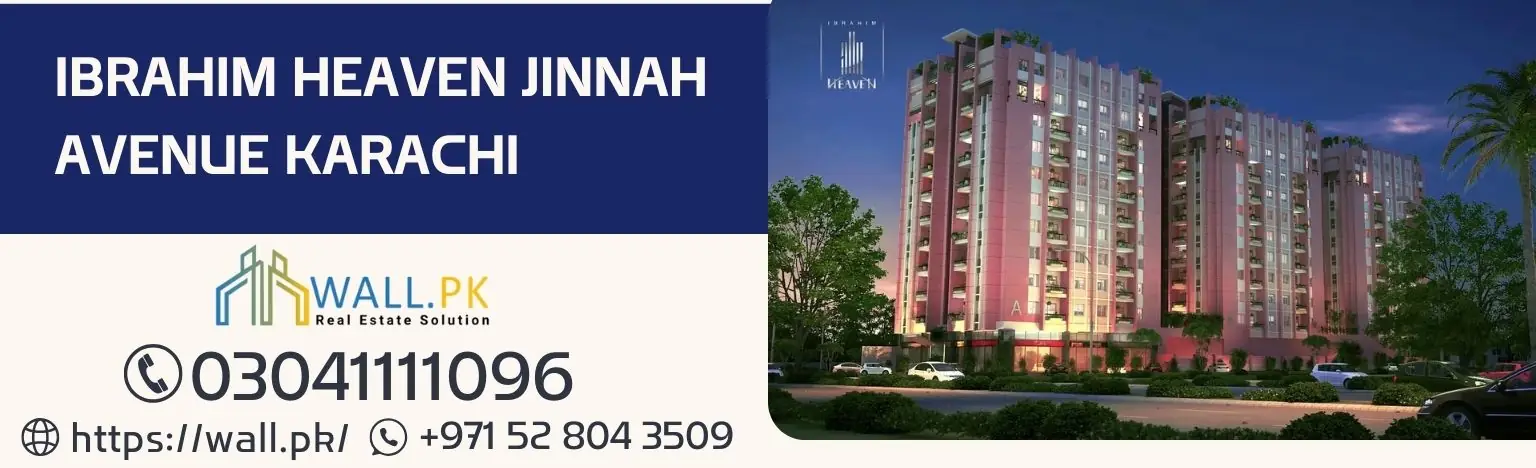
One of Karachi’s most prominent and rapidly developing corridors. Crafted by the reputable South Constructions, this upscale development introduces a refined standard of living for families seeking modern comfort, secure surroundings, and proximity to key landmarks.
The standout feature of Ibrahim Heaven is its prime location. Positioned on Main Jinnah Avenue, the project sits adjacent to Malir Cantonment and enjoys seamless access to major city arteries like Shahrah-e-Faisal and the Jinnah International Airport.
This connectivity makes Ibrahim Heaven an attractive option for professionals, families, and frequent travelers who want to remain close to the city’s commercial hubs and transport networks while enjoying peaceful surroundings.
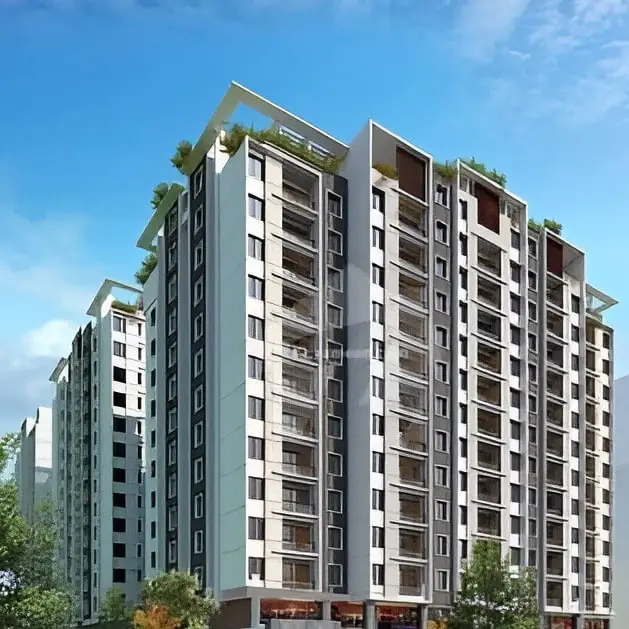
Ibrahim Heaven features three high-rise residential towers offering spacious 3-bedroom apartments. Each flat is meticulously designed with modern architecture, ensuring a blend of aesthetics and functionality. Every unit includes:.
Whether you’re a growing family or an individual seeking luxury and peace in the city, these apartments provide the comfort and space to match your lifestyle needs.
This gated apartment complex will offer all essential utilities and modern-day conveniences in one secure location. Residents will have access to:.
With everything thoughtfully planned, Ibrahim Heaven delivers a stress-free urban lifestyle in one of Karachi’s most coveted addresses.
South Constructions has a reputation for quality and timely delivery, and Ibrahim Heaven reflects their commitment to excellence. Whether you’re investing or looking for a place to call home, this project promises long-term value and comfort.
Researching this project?
Our research desk can confirm current status, pricing and availability — no commissions.
WhatsApp the research desk — +971 52 804 3509Where this sits in Karachi's market
Karachi's property map is institutional at the top — DHA and Bahria define the premium tier — with a broad middle of cooperative societies, KDA/MDA schemes and developer projects along Scheme 33, the Super Highway and the M-9 corridor.
Two features distinguish the market: location precision (values can shift several-fold within a few kilometres) and verification complexity, with land records split across multiple authorities.
The practical consequence: developer track record and clean paper carry larger premiums in Karachi than anywhere in Punjab, and they're usually worth paying.
From token to transfer — the process
Every transaction in Ibrahim Heaven Karachi should run on the same rails: token → verification → bayana → transfer. The token holds the plot; the verification at the society office confirms the file is genuine, the dues ledger is clear and no hold exists; the bayana agreement locks price and timeline in writing with earnest money; and the transfer appointment closes it — dues challans paid, transfer fee deposited, identities verified, and the letter issued in your name before you hand over the balance.
Overseas buyers add one layer: a special power of attorney, attested by the Pakistani consulate, naming a trusted local representative for the office appearances. Have it drafted around the specific society's transfer requirements — offices differ on wording — and confirm by phone what documents the transfer branch wants before the appointment is booked.
The all-in cost stack
The headline price is rarely the final number in Ibrahim Heaven Karachi or any Pakistani society. Budget for the stack that sits on top: development charges (often levied per Marla, sometimes payable in slabs as works progress), possession charges when you take physical handover, utility connection costs for electricity, gas and water meters, the society's transfer fee on purchase, and the tax layer — advance income tax on the transaction under the FBR's withholding regime (rates differ for filers and non-filers and change with federal budgets) plus provincial stamp duty where applicable.
Ask the office for the current schedule of every charge in writing before bayana, and have the seller's paid-up position confirmed against the same schedule — unpaid development charges silently become the buyer's problem after transfer. A plot that looks 5% cheaper than the market often carries exactly that much in hidden arrears.
Closing paperwork for the unit
- Unit allotment letter verified against the builder's register — number, floor and size matching.
- Ledger statement from the office: paid, pending, and any surcharge or restoration history.
- Project sanction set — approved plans and the land's documented status.
- Sale agreement in writing with the settlement date and what happens on default by either side.
- Fresh transfer letter in your name at closing, plus the paid transfer-fee challan.
- Service-charge clearance to the current month.
Scan the complete set the day of transfer; a duplicated file is the cheapest insurance in property.
Who this suits — and who should look elsewhere
Ibrahim Heaven Karachi makes the most sense for end-user families who value the corridor's access and want organised living at this price tier, and for patient investors comfortable doing file-level verification and holding through a development cycle.
It is a weaker fit for buyers who need guaranteed short-term liquidity, or anyone unwilling to do the authority and dues checks this market genuinely requires — in that case, paying the premium for a fully delivered, top-tier address is the safer trade.
More buyer questions
Can overseas Pakistanis buy here remotely?
Yes — the standard route is a special power of attorney attested by the Pakistani mission in your country of residence, authorising a trusted local representative to complete verification and transfer formalities. Confirm the society office's specific POA wording requirements before drafting, and route all payments through banking channels in your own name for a clean money trail.
What's the difference between a file and a possession plot?
A file is a right to a plot — often before development or balloting assigns a physical location — while a possession plot is demarcated ground you can fence and build on.
Files trade cheaper and move faster, but carry development-timeline risk and ongoing installment obligations; possession plots cost more and carry less uncertainty. Price the difference consciously rather than treating the two as the same asset.
Is token money refundable if I walk away?
By market custom a token is refundable if the seller's file fails verification, and forfeit if the buyer simply changes their mind — but custom is not enforcement. Put the refund conditions in writing on the token receipt itself: what failure triggers a refund, and by when it must be returned.
How long does a plot transfer usually take?
Once the file is verified and dues are clear, the transfer itself is typically completed in a single office appointment, with the new letter issued the same day or within a few working days depending on the society's process.
The real timeline driver is preparation: dues clearance, document attestation, and — for overseas parties — power-of-attorney processing through the consulate.
Should I buy on installments or pay cash?
Cash purchases in Pakistani societies typically price 15–30% below the equivalent installment total — the developer charges for financing risk. Installments make sense when the entry barrier matters more than the total, or when you'd deploy the retained capital at better returns elsewhere.
Compare the installment premium against what your capital earns; that spread is the real cost of the plan.
How do I check if a society is genuinely approved?
Go to the authority, not the marketing: every development authority maintains records (and increasingly public lists) of approved schemes and phases. Request the current status letter for the specific phase you're buying into — approvals are granted per phase, can carry conditions, and can lapse.
A scheme-level claim in a brochure is the start of the question, not the answer.
Buyer takeaways
- Verify the announcement with the project office directly — marketing timelines shift.
- Get the full payment schedule in writing, including development and possession charges.
- Check what comparable inventory in the corridor actually resold for recently.
More property news
- Burj-Ul-Harmain Karachi Location Map and Other Details
- Falaknaz Dreams Malir Karachi
- Grey Noor Towers Karachi
- Saima Presidency Karachi
Plot specifications and legal status
Approval and verification. Ibrahim Heaven Karachi sits under the regulatory oversight of the Sindh Building Control Authority (SBCA). Before paying any booking amount, buyers should request a copy of the No Objection Certificate (NOC) directly from the developer and cross-check the scheme name against the Sindh Building Control Authority (SBCA)'s published approved-societies list. The NOC issuance date matters — older NOCs may have lapsed or been amended, so independent verification before payment is essential.
Plot specifications and payment plan. Plot categories follow standard Pakistani sizing — 3 Marla (~800 sq ft), 5 Marla (~1,125 sq ft), 10 Marla (~2,250 sq ft), 1 Kanal (~4,500 sq ft). Confirm the exact dimensions of any allotted plot against the official site plan before signing. The payment cycle typically splits across booking (10–25% down payment), confirmation (within 30 days), monthly or quarterly installments, balloting at plot allotment, and balance payment on possession. Each tranche is contractually defined — review the payment schedule, late-payment penalty clauses, and the possession milestone carefully before committing.
Buyer documentation and investment outlook. Required documents at booking include CNIC copy, next-of-kin CNIC, two passport-sized photographs, and the booking amount paid via pay order or cheque in favour of the developer's registered entity — never cash transfers. Keep certified copies of the allotment letter and all payment receipts for transfer and resale records. Investment outlook for Ibrahim Heaven Karachi rests on three durable factors: ROI horizon (typically 3–5 years for new schemes before resale liquidity matures), expected capital appreciation tied to corridor development pace, and rental yield benchmarks once construction maturity is reached.